Elektriker Wien & Elektriker Notdienst Wien: How to Choose the Right Service
Power never fails at a “good” moment, does it? It’s always just before a Zoom call, a Sunday roast, or right when the washing machine is full. If you live in Vienna long enough, you will eventually need an Elektriker Wien
for normal work – and, sooner or later, an elektriker Notdienst Wien
when things go sideways at 2 a.m.
This is not a theory lesson. It’s the kind of stuff you wish you had read before
the fuse box started making that suspicious buzzing noise. We’ll talk about what “Elektriker Wien” actually means, when you really need a Notdienst, what it’s all going to cost you, and how to avoid getting stuck with the wrong person at the wrong time.
What “Elektriker Wien” Actually Covers
“Elektriker Wien” sounds simple, but it’s a pretty wide umbrella. Usually we’re talking about a licensed electrician who comes for planned work in Vienna: apartments in the 7th, old houses in the 19th, offices near the Ring, little shops in Favoriten – all of that.
The key word here is planned
. Nothing is on fire. Nothing is smoking. You can still make coffee. It’s the kind of work that can wait for an appointment without anyone panicking.
Planned electrical work in Vienna
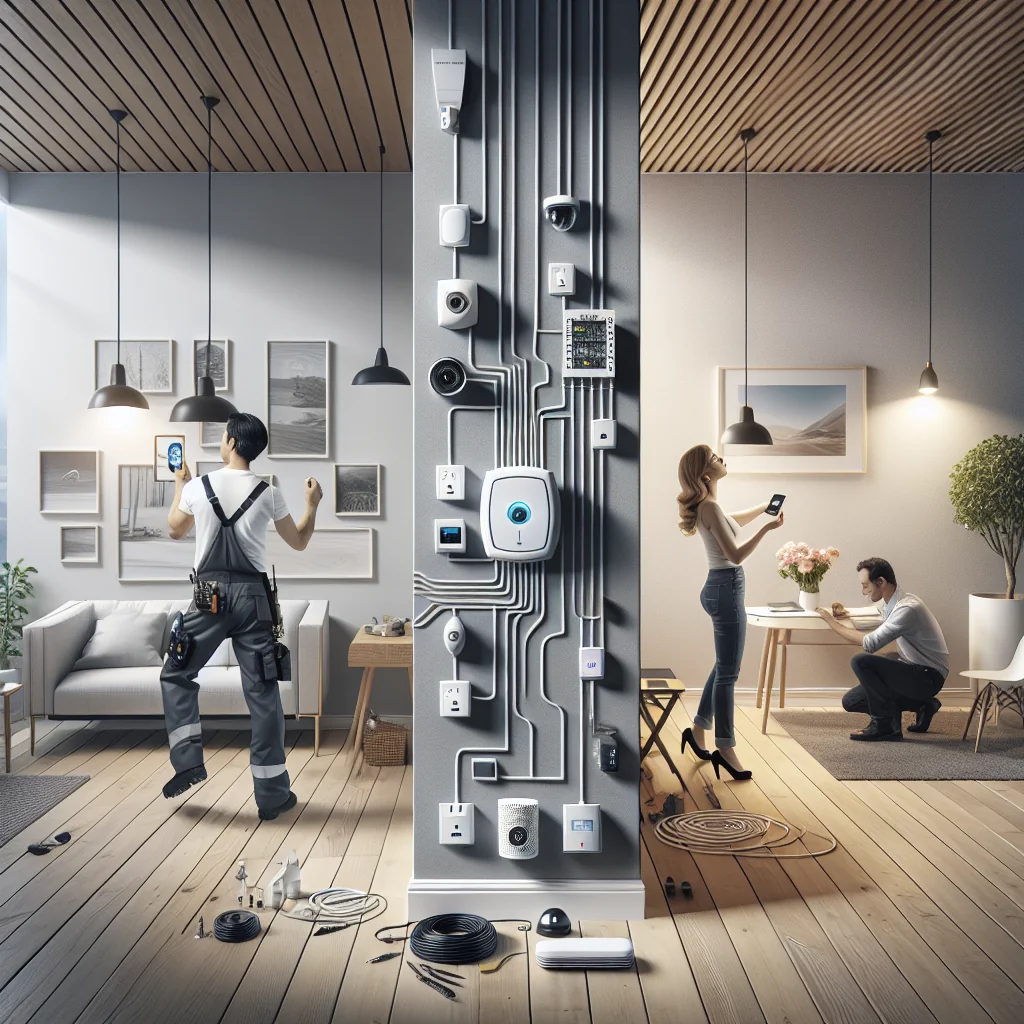
In everyday life, a “normal” Elektriker Wien deals with the boring but important stuff: new lines for your renovation, extra sockets so you stop living with extension cords, new lighting, or a proper check of an older installation.
Some electricians love private homes and old Altbau charm. Others are more into commercial jobs – offices full of network cabling, workshops, or small factories. Many firms do both, but usually with different teams and different levels of experience.
That’s why it’s worth checking their website or asking directly: “Machen Sie eher Wohnungen oder eher Büros/Werkstätten?” A one‑person company that mostly installs lamps in living rooms is probably not the best choice for a big office rewiring – and the other way round.
What Makes an Elektriker Notdienst Wien Different
An elektriker Notdienst Wien
is the “we come when everyone else is sleeping” version of an electrician. You don’t call them for a new lamp. You call them when something feels dangerous or your daily life stops working because half your flat is dark.
Many Notdienst services are officially 24/7. Some are “almost” 24/7 – evenings, weekends, holidays. The important part: they move fast and treat your case as urgent, not “We have an appointment next Tuesday at 11:30”.
How emergency electricians in Vienna operate
When a Notdienst electrician shows up, they usually arrive with a van packed like a rolling toolbox: spare fuses, cables, basic parts, measuring devices. Their first job is not to make everything pretty. Their job is to make it safe
.
Often, they’ll stabilize the situation – cut off a dangerous circuit, isolate a fault, restore at least partial power – and then recommend proper follow‑up work during normal hours. Think of it like an emergency room: they stop the bleeding first, the “cosmetic surgery” comes later.
And yes, it costs more. You’re paying for speed, inconvenient hours, and the pressure of “this has to work now
”. If you know that before you dial, you’re less shocked when you see the invoice.
Typical Services Offered by Elektriker in Vienna
Before you pick up the phone and say “Können Sie mal kurz schauen?”, it helps to know what most Elektriker Wien actually offer. Serious companies usually cover three big areas: installation, repair, and safety.
A lot of them try to be your “from first socket to full renovation” partner – meaning they’ll fix a broken outlet today and handle your kitchen upgrade next year without blinking.
Main service categories you can request
Here’s the kind of stuff that often shows up on their service lists. Don’t treat it as a shopping list, more like a reality check: if something you need is missing, ask about it directly instead of assuming.
- New installations and rewiring for apartments, houses, and offices
- Upgrading distribution boards (fuse boxes) and adding RCDs (FI‑Schalter)
- Fault finding and repair for sockets, switches, and lighting
- Planning and installing lighting systems, including LED conversions
- Smart home systems, intercoms, and simple building automation
- Electric vehicle (EV) charging station installation and safety checks
- Electrical safety checks, inspection reports, and documentation
- Emergency call‑outs for power cuts, short circuits, and burning smells
Not every firm does everything. A small neighborhood electrician might be brilliant for your old flat but totally uninterested in EV chargers. If your topic is a bit niche – wallbox, smart home, server room – say that clearly when you call.
Recognising Real Electrical Emergencies in Vienna
This is where many people hesitate: “Is this really an emergency, or am I overreacting?” Sometimes you can wait until tomorrow. Sometimes waiting is the dumbest idea you could have.
A useful rule: if your gut says “this feels wrong” and your nose says “this smells wrong”, don’t play hero. Treat it as urgent.
Signals that justify an emergency call-out
Clear red flags? Sparks. Actual visible sparks. A sharp burning smell from a socket or the fuse box. Breakers that trip again and again the moment you reset them. Smoke from a device or cable. Exposed live wires. Water anywhere near electrical parts.
In those situations: hands off. Literally. Don’t touch metal parts, don’t fiddle with wires, and keep kids and pets out of the room. Curiosity and electricity are a bad combination.
And if you see real flames or thick smoke: forget the electrician, call the fire brigade first. An Elektriker can fix your installation later. Firefighters deal with the “house might burn down” part.
Step-by-Step: What to Do Before Calling an Elektriker Notdienst Wien
When something goes wrong, people either freeze or rush. Neither helps. Having a rough mental checklist makes it easier to stay on track instead of panicking or doing something dangerous.
Safe actions before the emergency electrician arrives
Move slowly. Think before you touch anything. Your job is not to repair – your job is to keep everyone safe and give the elektriker Notdienst Wien
good information.
- Look around: is there obvious danger like fire, heavy smoke, or flying sparks?
- If yes, leave the area and call the fire brigade. Don’t argue with yourself about it.
- If it seems safe to do so, switch off the main power – but only if you can reach the switch without touching metal or wet surfaces.
- Get children, pets, and curious neighbors away from the problem area.
- Do not pour water on anything electrical. Do not “just wiggle the cable”. Do not touch exposed wires.
- Try to remember what happened right before the problem: a storm, a device turned on, renovation work, a loud “pop”?
-
Call an elektriker Notdienst Wien
, describe the symptoms calmly, and ask clearly about call‑out and basic costs. - Clear access to the fuse box and to the affected room so the electrician doesn’t have to climb over boxes and furniture.
The more precise you are about what you saw, heard, or smelled, the faster the electrician can narrow down the fault. Faster diagnosis usually means less time billed – which your wallet will appreciate.
How to Compare Elektriker Wien and Emergency Services
Vienna is full of electricians. Some brilliant, some okay, a few you’d rather not meet twice. Picking one at random from Google at midnight is basically gambling – sometimes you win, sometimes you don’t.
A bit of structure helps. You don’t need a spreadsheet (unless you enjoy that sort of thing), but you do
need a few clear criteria.
Key criteria for evaluating electricians in Vienna
Forget the idea that the lowest hourly rate is automatically the best option. A cheap but unreliable electrician who doesn’t show up, or has to come back three times, becomes expensive very quickly.
Key comparison criteria for Elektriker Wien and elektriker Notdienst Wien
| Criterion | Why it matters | What to look for |
|---|---|---|
| Licensing and registration | Unlicensed work can be unsafe and cause trouble with insurance or authorities. | Registered electrical firm, full company name, address in/near Vienna, visible legal details (Impressum). |
| Experience and focus | Someone who knows your type of installation makes fewer “expensive experiments”. | Years in business, clear focus (domestic, commercial, or both), examples of similar projects. |
| Availability | In an emergency, “maybe next week” is useless. | 24/7 or extended hours, realistic response times for Notdienst (not just marketing slogans). |
| Pricing structure | Transparent prices mean fewer nasty surprises after the job. | Clear hourly rate, call‑out fee, evening/weekend surcharges explained before they come. |
| Communication | Misunderstandings cost time, money, and nerves. | Fast replies, understandable explanations, written offers or confirmations if the job is bigger. |
| Guarantees and insurance | If something fails later, you don’t want to be left alone with the problem. | Warranty on work, liability insurance, test reports where required. |
| Customer feedback | Real‑world experience from other clients is worth more than any advertisement. | Online reviews, personal recommendations, and how they react to complaints (defensive or helpful?). |
You don’t need perfection in every single category, but you do
need clear answers. If someone is vague about license, prices, or availability – especially for Notdienst – that’s your cue to keep looking.
Price Factors for Elektriker and Notdienst in Vienna
Let’s talk money, because pretending it doesn’t matter is pointless. Prices for Elektriker Wien
and elektriker Notdienst Wien
can vary a lot, but the logic behind most invoices is surprisingly similar.
How electricians in Vienna build their invoices
Typically, you’ll see three building blocks: a call‑out fee, a labour rate (per hour or per half hour), and materials. For Notdienst, on top of that, you often get evening/night/weekend/holiday surcharges. Travel time inside Vienna may or may not be included – you have to ask.
Before you agree to anything, ask one very concrete question: “Was kostet mich die erste Stunde inklusive Anfahrt ungefähr?” That gives you a realistic starting point instead of a theoretical hourly rate that doubles once all extras are added.
Also clarify how they handle longer jobs: fixed price, hourly, or a mix. Serious electricians are usually happy to explain the structure, even if they can’t predict the exact final amount yet.
Safety and Legal Aspects in Austrian Electrical Work
Austria is not casual about electrical installations. There are rules, standards, and paperwork – and they exist for a reason. A “quick fix” by an unqualified friend might work today and become a legal or insurance nightmare tomorrow.
For bigger projects and rental properties, landlords and property managers often insist on formal test reports. Those reports show that a qualified Elektriker Wien
has checked the system and found it safe at that point in time.
Why professional work and documentation matter
DIY is great for painting walls or building shelves. For electrical work, it’s a different story. Wrongly connected cables can stay “fine” for years and then cause a fire – and yes, insurers do check who did the work when something serious happens.
Many insurance contracts require proof that electrical work was done by a licensed professional, especially after fires or major damage. So if it’s more than changing a bulb or plugging in a lamp, think twice before going the DIY route.
If you’re renting, let your landlord or property manager know before you make major changes. Some buildings have preferred electricians or internal rules. In a real emergency, of course, you call a Notdienst first and deal with landlord politics later.
Practical Tips for Working with an Elektriker Wien
The relationship with your electrician doesn’t have to be complicated. A bit of preparation on your side can save both of you time, nerves, and money.
Getting the best results from each visit
Before the visit, make a short list: which sockets don’t work, which lights flicker, what you want changed. If something looked or sounded strange (small sparks, buzzing, scorch marks), take a quick photo or note it down before you switch things off.
Clear the way: access to the main panel, meters, and the problem areas should not be blocked by wardrobes, bicycles, or the entire contents of your storage room. Every minute the electrician spends moving furniture is a minute you’re paying for.
After the work, ask in plain language what was done and why. No need to become an engineer; you just want to know the basics. Request any test reports or updated circuit labels and keep them somewhere you’ll actually find them again.
And then: save the contact details of the Elektriker Wien
and a reliable elektriker Notdienst Wien
in your phone. When something goes wrong at night, you’ll be glad you’re not starting from zero on a search engine.
Choosing the Right Elektriker Wien for Your Situation
Not every job needs the same kind of electrician. For planned projects – a kitchen remodel, a full flat renovation, adding an EV charger – you can (and should) take your time.
Get at least a second quote for bigger jobs, and compare what’s included, not just the final number. One offer might be cheaper because half the important work is “optional” in tiny print.
For emergencies, the priorities flip: response time, safety, and clear basic pricing are more important than saving 20 Euro on the hourly rate. When your fuse box is humming and smells like burnt plastic, you don’t want the slowest but cheapest option.
Building a simple plan for future electrical needs
The easiest way to avoid stress later is to prepare a little now. Pick one trusted standard Elektriker Wien
for planned work and one reliable elektriker Notdienst Wien
for emergencies. Store both numbers where you’ll find them fast.
Then, when the lights suddenly go out in the middle of a storm or a socket starts to smell funny, you’re not stuck scrolling through random ads in the dark. You already know who to call – and that alone makes dealing with electrical problems in Vienna a lot less dramatic.